
Where data becomes intelligence.
The Stroke Helper Lab is the core of our learning system.
Here, structured and clinically validated datasets are analyzed, patterns are identified, and algorithms are continuously refined.
What begins in the app and is clinically evaluated in the Pro version converges here — to optimize future screenings.
Not a static product.
A system that improves with every validated data point.
Quality, transparency, and control
tructured data foundation
Changes in heart rate provide important indicators of acute stress and potential neurological events.
Clinical validation
Algorithms evolve based on clinically evaluated cases. Pattern analysis, optimization, and evaluation are conducted in a structured and traceable manner. Every improvement is documented.
Version control & transparency
Models are versioned. Changes are traceable. Deployment states remain reproducible. This ensures regulatory clarity.
Interoperable architecture
The lab operates with FHIR-compliant datasets based on HL7 standards. Structured data enable study readiness, system integration, and international interoperability.
The learning loop
App → Pro → Lab → optimized models → improved app. A closed-loop system that becomes more precise with every validated data point.
The physician decides. The AI supports.
The AI does not operate autonomously. Physicians review, assess, and can correct results. The Lab is designed as a supportive system — not a replacement for clinical expertise.
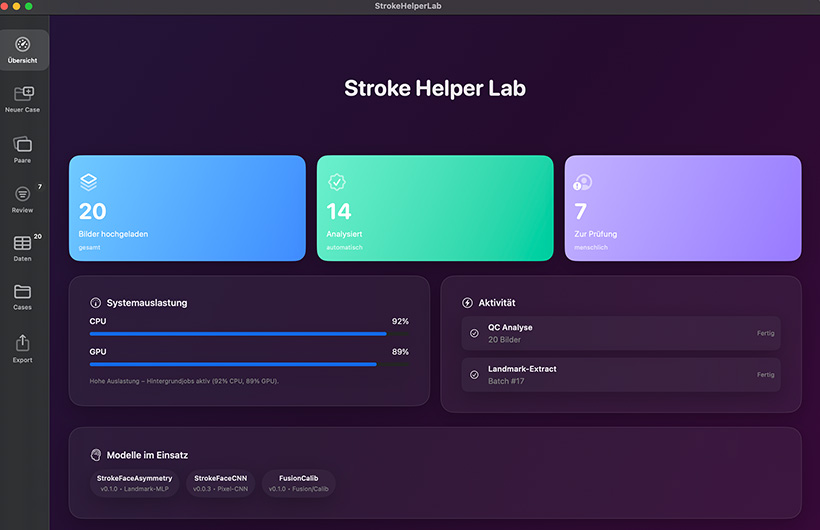
Intellligence Lab (laboratory)
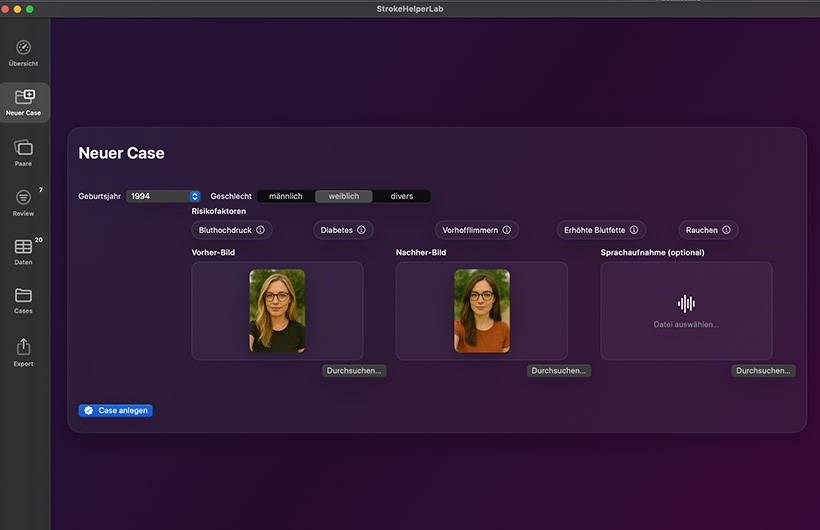
New Case – Start of Training
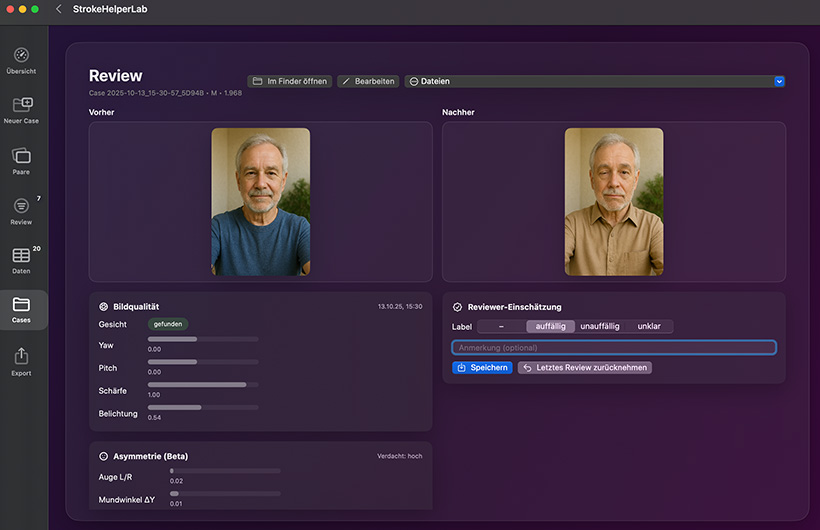
Review – Evaluation and Assessment
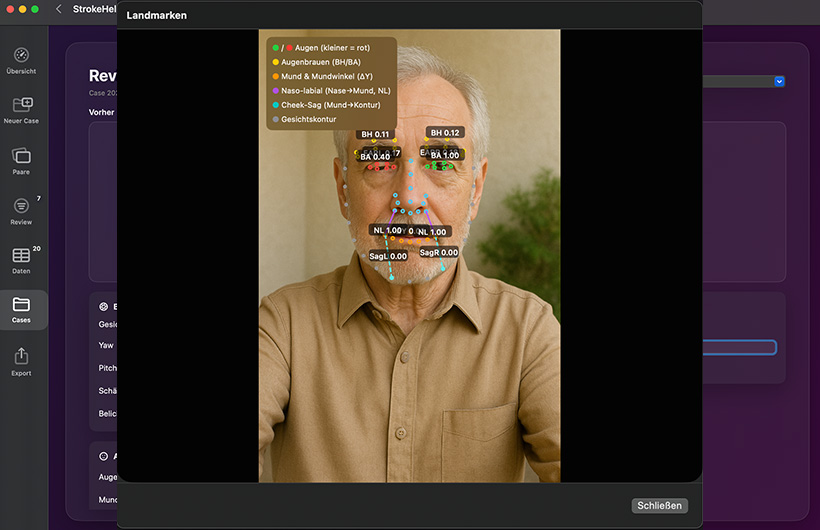
Landmark Analysis – Detecting the Smallest Changes
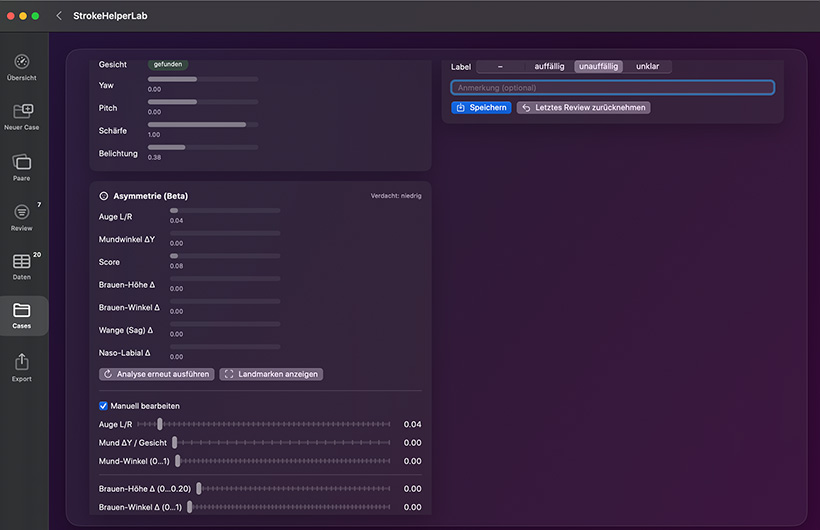
Manual Validation – Human and AI in Collaboration
Intelligence Lab
Central platform for AI training
Start: with human involvement (doctors, experts validating data)
Goal: continuous improvement of detection accuracy
Clinical Pro
Rollout version for hospital staff
Used for data collection in real environments
Provides diagnostic capabilities
Sends data & results back to the Lab → strengthens training
AI MIRA – in-house development
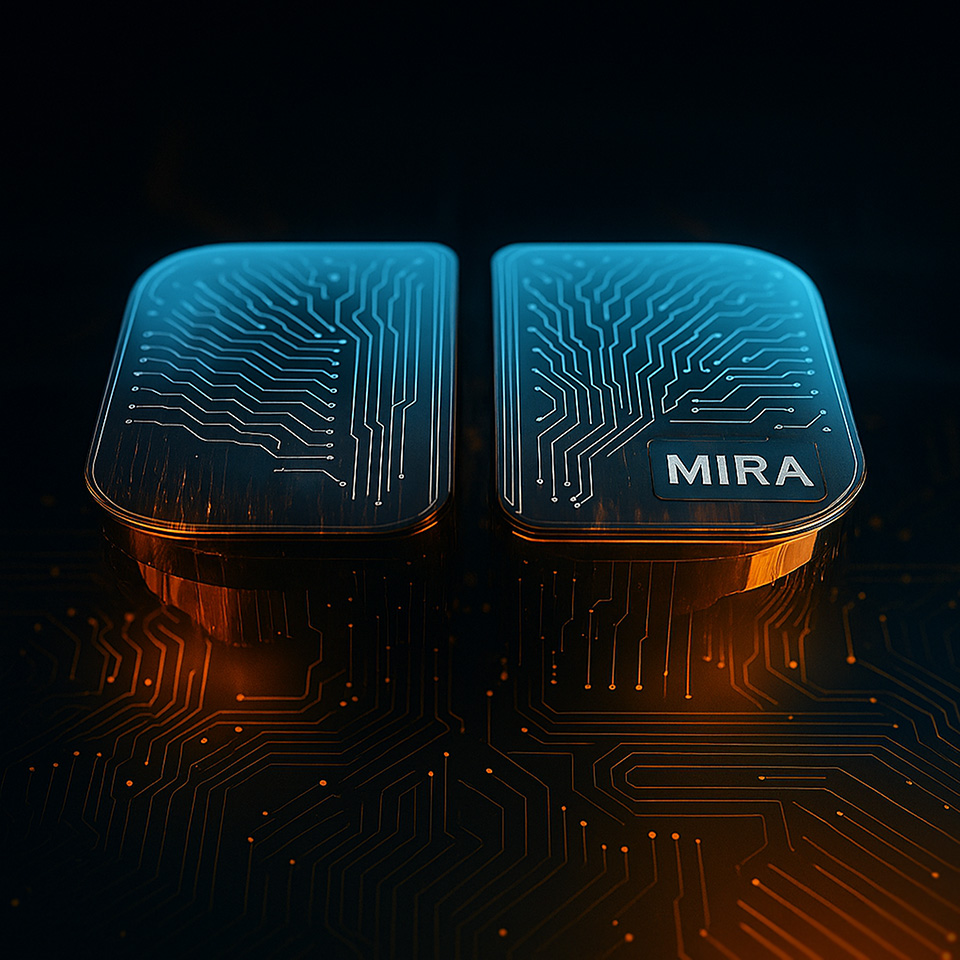
StrokeFaceAsymmetry: Analysis of facial asymmetries (mouth, eyes, cheeks, eyebrows)
StrokeFaceCNN: Deep learning model (Convolutional Neural Network) for image & 3D FaceID recognition (TrueDepth data, facial scans)
FusionCalib: Fusion of image, speech, and checklist data for higher precision
Pattern recognition & algorithm development → continuous improvement of early detection in new app versions
Stroke Helper App
For patients & relatives
Detects symptoms in time (face, speech, checklists)
Supports in emergencies: action guidance & emergency call option